

Many English teachers are familiar with the challenges of encouraging speaking and listening in KS3. These challenges often include students’ genuine anxiety and fear of presenting to peers, initial refusals to participate, and some parents supporting ‘opt-outs’ by contacting the school at the first sign of difficulty. Like any aspect of the curriculum, speaking and listening activities require careful planning, but are particularly prone to heightened negative responses from both students and parents.
Before you begin, I would strongly suggest that you consult this brilliant document, produced by CCEA 2024 called ‘Language and Literacy Progression Framework’ which provides a great roadmap for curriculum planning and implementation for KS3.


Context and setting:
In a selective setting, the more able pupils are often primed, energized, and enthusiastic about tasks, with very little resistance—perhaps just one or two needing a bit of encouragement. However, in a non-selective or all-ability setting, the story is quite different. The class tends to split into three groups. The first third, the more able pupils, need some help and direction but are largely independent. They often check in with questions like, “Can you read over mine?” to ensure they’re on the right track and eventually complete the task with aplomb. The second third are tentative and need support scaffolds, positive reinforcement, and speech practice. They attempt the task initially and work through it competently, eventually completing it. The final third includes a mix of SEND pupils with ASD, social anxieties, visual impairments, and some with physical disabilities.
Interestingly, many SEND pupils often excel when given the opportunity to share their hobbies, thoughts, or views with their peers. I recall several instances where classroom assistants quietly cried with pride during speeches and cheered on their pupils upon completion. I’ve been fortunate to work with many brilliant CAs who are true supporters and advocates for their pupils, making my job much easier. These experiences can be hugely positive and uplifting, transforming classroom relationships once trust is built and rules are established. I’ve always believed that English is a pastoral subject, and English departments are privileged to really get to know pupils on a personal level, witnessing their growth, no matter how big or small the achievement.
That being said, the ‘heavy lifting’ for oracy skills usually falls to English departments. They ensure opportunities are provided, delivered appropriately, and embedded as part of preparation for GCSE English Language (Speaking and Listening is a 20% requirement for GCSE English Language in NI). The goal is to develop oracy skills early through presentations, group discussions, and role plays, so that by the time pupils reach GCSE, they are familiar with the format. This approach demystifies the process and encourages maximum participation.
If you’re a Head of Department, English teacher, or subject lead looking to incorporate speaking and listening tasks, I have some tried-and-true suggestions and ideas. Like many challenges in schools, prevention is a good place to start.
Engaging Parents Early: The Key to Oracy Success
Get ahead of the curve by informing parents about upcoming speaking and listening tasks and their purpose. This can be done at a Year 8 parent event or during initial parent visits. Set out your stall early and make it clear that these tasks are part of the curriculum and not optional. Parental support is crucial, and when parents are on board, your job becomes much easier with a united front. Repeat this every year and send out school communications to keep parents in the loop—some schools even use oracy-based assessments as one of their main evaluations during the school year.
To prime students and create a positive mindset early on, you could send home warm-up tasks or activities for parents to do with their children. This could be as simple as a text with links to activities, like those on BBC Bitesize. The main message is to reinforce that oracy-based activities and assessments are essential parts of the English curriculum and will benefit pupils in the long run.
Consider assigning this element of the curriculum to a staff member with a special interest who can organize events or extra-curricular activities. For example, the Soroptimist International Speaking Competition has always been a highly successful and enjoyable experience, regardless of the outcome.
Creating a Safe Space:
In Year 8, the enthusiasm was always palpable when you gave them a task that involved a chance to present to the class or teach their peers something new. Conversely, I found that by the time they reached Year 10, the enthusiasm had waned, puberty and hormones and class kudos had kicked in along with the following retorts to any suggestion of presenting to the class: ‘You’re not serious?’ or ‘Are you for real?’ and my favourite, ‘I couldn’t do that, I’d be scundered!’ but again, these initial fears can be addressed by having a light hearted approach with some humour and fun activities, and further highlights the importance of persevering and embedding oracy, making it habitual in Year 8 and 9 lessons.
Shifting Ground and Audience:
When pupils reach GCSE and have chosen their pathways, the class dynamics change, and a ‘new audience’ is formed. This can also present further complications. To combat this, I did a quick ‘sticky note survey’ where I gave each pupil a note and asked them to tell me what they were worried about when presenting. In an all-girls setting, the overwhelming response was ‘standing in front of the class’ and ‘feeling self-conscious’ or just the fear of it all. I also referenced this scenario in Year 8-10 to reinforce the point of getting over the fear early on and building confidence over time.
The Psychology of Presenting:
For many pupils, standing at the front of the room and feeling exposed, especially in the front of the body, can evoke a range of emotions. It often leads to a sense of vulnerability and discomfort. This sensation can be both physical and emotional. Physically, pupils might feel a heightened awareness of their surroundings and a desire to cover up or hide. Emotionally, it can trigger feelings of embarrassment, anxiety, or even fear, as if you’re being judged or scrutinised.
This reaction is quite common and can be linked to social anxiety or past experiences. For some, it might happen in specific situations or contexts. It’s important to recognise these feelings and find ways to help pupils manage them, such as practising mindfulness or grounding techniques and demystifying the process or modelling. Asking older pupils to come in and talk about their experiences can be useful and encouraging.
Normalise discussions around nervousness and feeling anxious:
Have a discussion on why people get nervous or anxious and the science behind it (ask the science department to get involved) In the context of presenting, acknowledging that nerves and self-doubt may arise is a good start but discuss how you can choose not to be controlled by them. For example, you could talk about Stoicism and how it teaches us to accept what is beyond our control and focus on our responses. Obviously, you would pitch this at the right level depending on year group or class.
Encourage pupils to redirect their attention to the things they can manage instead of fixating on the outcome of the speech. Walk through the preparation, success criteria, delivery, and mindset. It’s also helpful to acknowledge that we cannot control how every member of the class or audience will respond, but we will establish and agree the ground rules together to ensure that everybody is clear. You could provide a tick sheet for peer assessment or active listening as well.
Stoicism is also useful as it also teaches us to accept the possibility of failure without allowing it to paralyse us. It can be a liberating feeling to acknowledge that not every presentation will be flawless and that making mistakes and ‘progress over perfection’ is healthy. Show them a roadmap from KS3 to GCSE and how long they will have to develop their skills and highlight the importance of social skills and presenting in the world of work or careers.
A Note on Seating:
Pupils sitting at the front of the classroom often feel self-conscious for several reasons. Research indicates that factors such as shyness, nervousness, and lack of confidence can significantly impact their comfort levels. Being in close proximity to the teacher and being more visible to peers can heighten these feelings, making pupils more aware of their actions and potentially more anxious about making mistakes. With this in mind, consider how the task could exacerbate those feelings and consider the layout and rotation of seating.
Additionally, the pressure to participate and the fear of being judged can contribute to this self-consciousness. We can help by creating a supportive environment, encouraging participation without pressure, and fostering a sense of community in the classroom by modelling good habits and using pupil voice to shape the boundaries or rules.
Scaffolds and Rich Talk:
Having some speaking stems or ways to frame discussion points or points of view will help shape the talk in the class. In junior school, I would tend to begin with agree and disagree or shocking or funny statements as a warmup, and then have pupils justify their points of view using the word ‘because’. It is useful to have whiteboards so that pupils can scribble down some thoughts and ideas.
In GCSE, I would use the following frame for group discussions and remind the class that they must challenge one pupil’s point of view and build on a point made by another pupil, to ensure they are able to attain good marks. Again, this takes practice and some task modelling. The videos from CCEA are a good starting point as well.

Suggested topics can range from healthy eating, social media, looking after the environment or school uniform. The Unit 1 exam paper can provide a useful springboard for discussion and can be linked to persuasion. I tend to use past papers as speaking and listening exercises and then eventually move to a written response with success criteria linked to the GCSE mark scheme. Again, this can be highly effective for exam practice, but I would recommend starting with broader topics and interests that the class might have.
Silver Linings, Not Silver Bullets:
I decided to survey my KS3 using sticky notes, Microsoft Forms and casual discussions to record responses from pupils across a range of classes in KS3. The feelings expressed were all very similar and related to embarrassment and standing at the front of the room. My solution was to consider having a physical barrier between speakers and their audience. I thought about teaching and how I fortified my desk during some classes or lessons in the early days, sometimes consciously and sometimes it was habit. The desk was my space and the front of the room too. Over time this changes, but it helped me understand how pupils might feel. I then came up with the idea of using a lectern and the results were astonishing!


I really didn’t expect that something so simple would be so effective. Noticeably more pupils volunteered for other forms of speaking such as sharing their creative writing stories, reading answers from their homework, and wanting to use the lectern to present their work in groups or pairs. Everybody wanted to have a go.
I then asked what made the lectern so effective and this is what they shared with me:
- It was ‘big and it covered them up, so they didn’t feel self-conscious in front of the class’. They could stand behind it and ‘not worry about others looking at them’. I tended to place the lectern beside my desk so that I could encourage and support, and then I would gradually move it to the centre of the room as the class progressed or grew in confidence.
- There was ‘somewhere to put their hands’ and rest their piece of writing when they spoke. (I do recall presenting in school and the page reverberating as I trembled in front of the class and tried to read.) Much like a writing scaffold, the lectern appeared to ‘take the load off the pupil’ in terms of feeling anxious or having to overthink and worry about holding their page, tracking the written text and using non-verbals. It also meant we could work on body language and gestures as well.
- They enjoyed standing behind it because ‘they felt important’ or ‘like a president or a politician’.
- It created a focal point for the class and reduced the fear of speaking and presenting. It was realistic and they could use the board as well.
- One thing I found useful was having the class type up their work. This meant they would have to read over it and correct it. It also encouraged more editing and text was legible, clear and large enough to read. You could create a style sheet indicating text font and size.
My advice would be to have a lectern in every room or certainly across the humanities. The collaborative and collective approach will ensure that expectations for speaking and listening are clear and visible across the whole school. Everybody stands to benefit, not least the pupils, who will have a chance to find their voice in a range of settings and subjects. In my view, this is Pupil Voice living and breathing and incubated by a cross curricular approach.
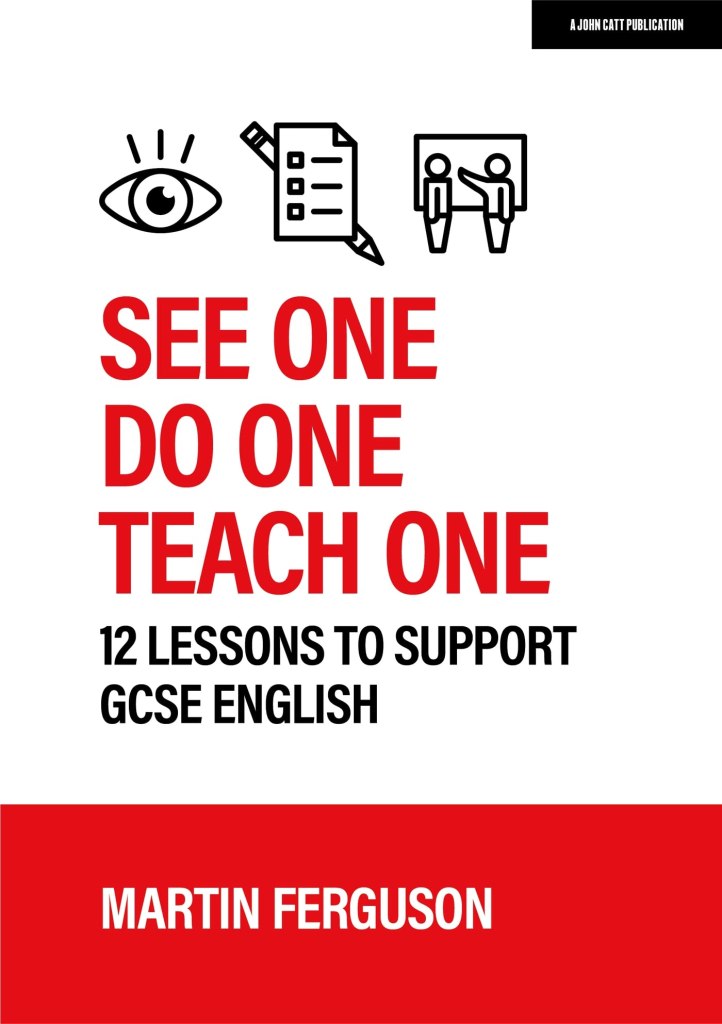
*In my book, ‘See One Do One Teach One’ I provide several scaffolds for speaking and listening in the ‘Teach One’ part of each lesson. There are also speaking and thought stems for class discussion and a specific section related to GCSE Speaking and Listening. Below, I have included some resources ranging from class discussion prompts, scaffolds, my 54321 planning page, KS3 success criteria and stick in and two S&L standardisation pro formas for GCSE.
I would also recommend https://www.roswilsoned.com/ for resources and oracy stems as well https://www.roswilsoned.com/oracy/
Measurements for lectern:


KS3 and GCSE Resources:
Twinkl Resources:
https://www.twinkl.co.uk/resource/au-l-53239-public-speaking-display-posters
https://www.twinkl.co.uk/resource/au-t2-e-4023-public-speaking-skills-powerpoint
https://www.twinkl.co.uk/resource/t3-e-043-speaking-in-public-skills-lesson-powerpoint
Leave a Reply